Working in the Swannanoa Valley
Black Mountain sits at the southern end of the Black Mountain range, about 2,300 feet up in the Swannanoa Valley. The Swannanoa River runs east to west through town and on into the French Broad basin, while streams east of Swannanoa Gap drain to the Catawba instead. Because I inspect the home and the septic system and test for radon and well water, one company can handle the whole property.
Black Mountain's housing stretches across generations. U.S. Census Bureau estimates put about 41% of homes before 1980 and roughly one in ten at 1939 or earlier, yet more than a quarter went up in 2000 or later. About 9% are seasonal or recreational homes rather than year-round residences. That spread is why no two Black Mountain inspections look quite the same.
As NC Real Estate Broker #213426, I'm extremely knowledgeable about the real estate process and the timelines an inspection has to fit into.
What shapes a Black Mountain inspection
I inspect by looking, not by opening walls: the NC Standards of Practice make a home inspection visual and non-invasive. Within that scope, two sets of local conditions get extra attention.
Older homes and the historic districts
Among Black Mountain's National Register historic districts are Downtown, Dougherty Heights, High Top Colony and Blue Ridge Assembly, and about one home in ten in town predates 1940. A house that old may have been updated by more than one owner. I look at how later wiring, plumbing and framing changes were tied into the original structure, and at the foundation and crawlspace underneath.
After Helene: Flat Creek, the Swannanoa River and the slopes above them
The National Weather Service's Helene summary describes "historic flooding" in Buncombe County. In Black Mountain, Flat Creek Road was washed out, and news reports counted at least 300 landslides in Buncombe County among more than 2,000 across Western North Carolina.
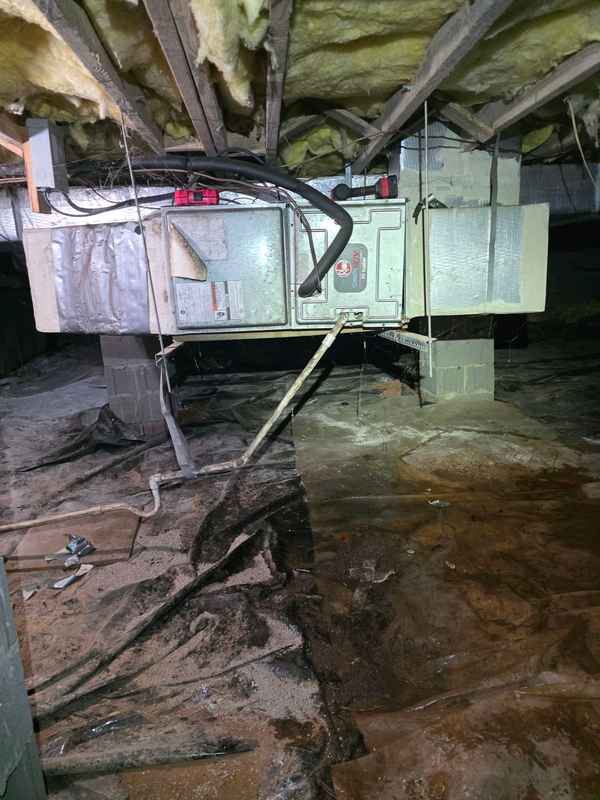
For a home near Flat Creek, the Swannanoa River or another local stream, I check the crawlspace, framing, foundation walls and equipment below the house for visible evidence that water got in. On a hillside lot I add the grading, how surface water moves around the foundation, retaining walls near the house, and cracks or other signs of movement. What the slope itself is doing is beyond what a home inspection can answer. When I see signs that point past the house, the report says so and names the kind of specialist to call.
Septic and well records in Buncombe County
For a property with a private well or septic system, Buncombe County's records have some gaps worth knowing about before you schedule:
- Buncombe County Environmental Health permits septic systems and private wells. Where public sewer isn't available, a septic permit is required before a building permit.
- Buncombe County's septic permits only go back to 1977, so older systems generally have no county documents. The original permits were kept on carbon paper and digitized in 2007.
- Well permitting began on January 1, 2005, under the local Board of Health's Groundwater Protection Rules. A well drilled before then generally has no permit record.
- Permit records can be searched on the county's online permit portal without registering, and septic permit data has been downloadable from the county's Open Data portal since December 2022.
The NC Standards of Practice leave septic systems and well water quality out of a home inspector's required scope, so the septic inspection and well water testing are booked as separate services.
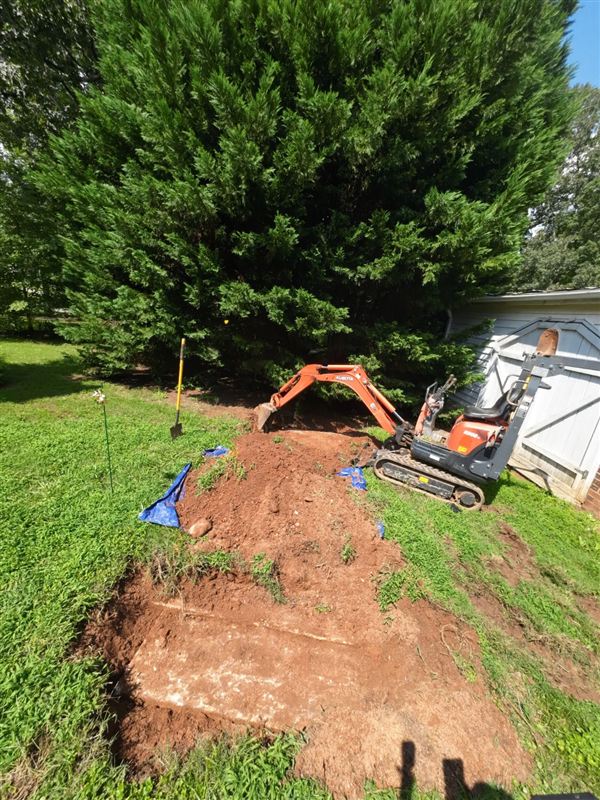
With or without a permit on file, a septic inspection comes down to what is in the ground. As NC On-Site Wastewater Inspector #60071, I start by locating the system. Then I uncover the tank, with a mini excavator when hand digging isn't practical, open it up and evaluate the visible condition of the tank and its components. The last step is a look over the drain field area for signs of trouble.
A well drilled before 2005 may come with no county paperwork at all, but its water can still be sampled. My well water testing involves collecting samples to be checked for bacteria and other common contaminants.
Radon in a Zone 1 county
On EPA's radon zone map, Buncombe is Zone 1, the top of the three tiers, where average indoor levels may be above 4 pCi/L. McDowell County, just east across Swannanoa Gap, and Burke County beyond it are Zone 2. NCDHHS recommends that Buncombe County homes have their indoor air tested, and that private wells be tested as well.
For radon testing, I set up a continuous radon monitor and keep it collecting data for 48 hours or longer. EPA recommends fixing a home whose result comes in at 4 pCi/L or above.
Black Mountain home inspection FAQ
Do you serve Montreat, Ridgecrest and Swannanoa?
Yes. Along with Black Mountain, I serve nearby Montreat, Ridgecrest and Swannanoa. If you are not sure whether I cover a property, call me at 828-443-2371.
How high have radon readings gone in Buncombe County?
169 pCi/L is the top single result in the NC Radon Program's Buncombe County data, far above EPA's 4 pCi/L action level. It's a one-time maximum, not a typical level. NCDHHS recommends testing the indoor air of Buncombe County homes and testing private well water too.
The septic system may be older than 1977. Will Buncombe County have a permit for it?
Usually not. Buncombe County's septic permits begin in 1977, and the county generally has no documents for systems installed before then. In that case the septic inspection starts by finding the tank on the property rather than on paper.
The well was drilled before 2005. Why can't I find a Buncombe County permit for it?
Buncombe County's well permitting started in 2005 under the local Board of Health's Groundwater Protection Rules, so a well drilled earlier generally has no permit record describing how it was built. A water test can still tell you about the water itself.
What do the WLS, SEP and WEL prefixes on Buncombe County records mean?
They are how the county filed well and septic records before 2010: WLS for a combined well and septic record, SEP for septic and WEL for wells. You can search records on the county's online permit portal without registering. If nothing turns up, the permit may be filed under an older parcel number, and the county's PIN history lookup can help you find it.