One city, three counties
Hickory is a Catawba Valley city in the western Piedmont, set in the Blue Ridge foothills. Lake Hickory, part of the Catawba River chain of lakes, forms its northern edge; Duke Energy's Oxford Dam created the lake in 1927. Most of Hickory lies in Catawba County, but the city also extends west into Burke and Caldwell counties. That three-county footprint decides which office holds a home's septic and well records and which county's radon data applies, so I've pulled those details together on this page.
I'm Shannan Hurt, and I'm a native of the area. My Hickory-area work also takes me to Long View, Brookford, Mountain View and St. Stephens. My NC Home Inspector #4327 license covers the house; my NC On-Site Wastewater Inspector #60071 credential covers the septic system. Radon or well water testing can be booked with either one. Because I also hold NC Real Estate Broker #213426, I'm extremely knowledgeable about the real estate process, including the due diligence and closing timelines a Hickory sale runs on. That's useful when the home inspection, septic inspection and radon test all need to be done before a contract date.
Hickory's housing, from the 1880s to today
According to Census estimates, half of Hickory's housing was built before about 1982. About a quarter of it went up before 1960, and roughly 9 percent dates to 1939 or before. On the newer side, a little over a fifth was built in 2000 or later.
Some of the city's older housing sits in National Register historic districts. Oakwood has 50 contributing buildings in Queen Anne, Colonial Revival and Craftsman styles from the 1880s to the 1930s. Kenworth's 52 contributing buildings are Colonial Revival and Craftsman, built from about 1915. The Claremont High School Historic District is the biggest of the three, with 172 contributing buildings from the late 19th to the mid-20th century.
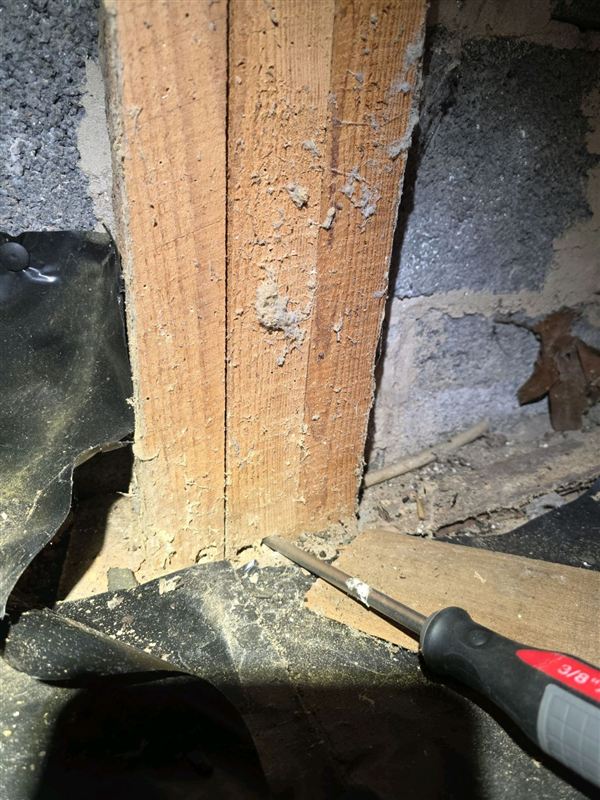
Under the NC Standards of Practice, what I do is a visual, non-invasive inspection. The rules also have me go into crawl spaces, basements and attics when they can be entered safely, and probe wood that looks deteriorated, which counts for a lot in a century-old Oakwood or Kenworth house. The report covers the structure and roof, the exterior and interiors, plumbing, electrical, heating and air conditioning, insulation, ventilation and the kitchen's built-in appliances. It also notes whether smoke alarms and, where the rules call for them, carbon monoxide alarms are present. The home inspection page covers the full scope.
Helene around Hickory
The City of Hickory declared a state of emergency effective 10 a.m. on Sept. 26, 2024, as Hurricane Helene moved in. Trees came down and power went out across Catawba County, according to the National Weather Service, which recorded a 52 mph peak gust at the Hickory airport. The city closed the Riverwalk's overwater bridge and the grass fields at Henry Fork River Park.
The major flooding in the county came downstream of Lake Hickory. With Oxford Dam's floodgates open, Lookout Shoals Lake crested 9.45 feet above full pool, its highest level since 1940. Catawba County's damage assessment counted about 100 flooded homes around Lookout Shoals and about 50 more with major damage countywide. If the house took on water, mention it when you book so I can give the crawl space, framing and mechanical equipment extra time.

Septic systems and wells around Hickory
Hickory operates its own water and sewer utilities. The city's water plant draws from the Catawba River, is rated at 32 million gallons a day, and also supplies Maiden, Long View and other nearby areas. Wastewater goes to three city treatment plants: Northeast, Henry Fork and Hickory-Catawba. Public water doesn't automatically mean public sewer, though, so confirm how a home's wastewater is handled rather than assuming it's on a sewer line.
Septic has a long history in all three of Hickory's counties. In an older NCDHHS table that looks to be built on 1990 Census counts, septic served about 55 percent of housing units in Catawba County's share of the Catawba River basin, about 65 percent in Caldwell's and about 68 percent in Burke's.
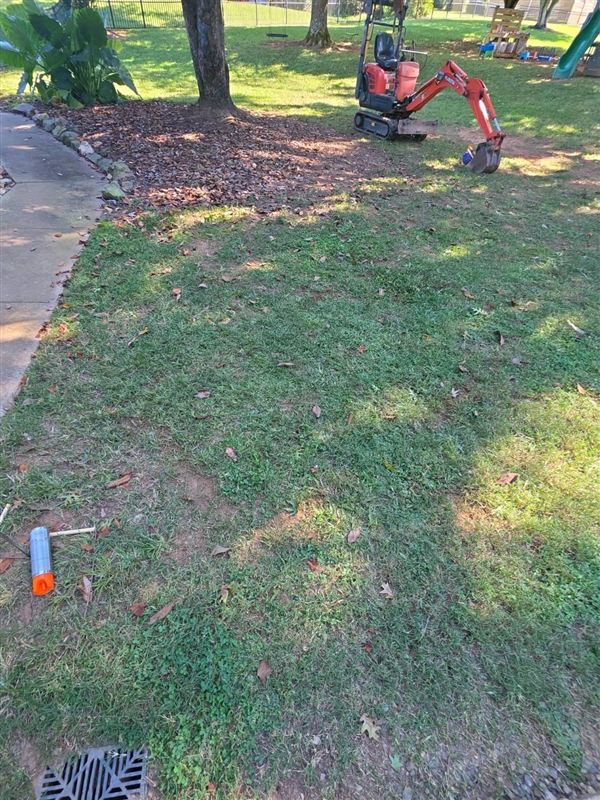
Step one on any septic job is locating the tank. When a tank is buried, I uncover it, with a mini excavator when hand digging isn't practical. Once the lid is off, I evaluate everything I can see, from the tank walls to its components, then look across the drain field for damp spots, standing water or anything else that points to a problem. The septic inspection page explains more.
Finding the septic permit for a Hickory address
It's worth pulling the septic permit early so you know what's on file. The property's tax record or deed will show which county it's in:
- Catawba County: request a copy of the permit online from Catawba County Environmental Health (25 Government Drive, Newton). The county notes that its ePermits portal can mislabel some permits as expired, so confirm with the office before reading too much into that status.
- Caldwell County: the Environmental Health division of the Caldwell County Health Department, based in Lenoir, has a form for requesting septic system records.
- Burke County: Burke County Environmental Health's septic page lists its septic forms, including an Existing Septic Verification Application.
Well water in Catawba County
Iron and manganese turn up often in Catawba County wells. In NCDHHS county well-test data, about 23 percent of 507 sampled wells had iron above the secondary standard, and manganese exceeded 50 micrograms per liter in about 18 percent of 513. Arsenic and lead results over their limits were less common, about 2 percent each. The county's well program points to excess iron, manganese and calcium as reasons some wells need filtration.
Neither well water quality nor the septic system is part of a standard NC home inspection under the Standards of Practice, which is why each one is booked on its own. For well water testing, I sample the well water for bacteria and a range of other common contaminants.
Radon across Hickory's three counties
All three of Hickory's counties, Catawba, Burke and Caldwell, are EPA Radon Zone 2 counties, meaning moderate potential. EPA's position is that the zone doesn't change the advice: every home should get a test. The NC Radon Program advises testing the air inside homes, plus water from private wells, in all three counties.
The program's county radon data, updated in August 2025, shows how much single buildings can vary. Catawba County's top reading is 49 pCi/L, Caldwell's 160 and Burke's 175. Each figure is the top result from one building rather than a typical level, and NCDHHS points out that radon varies from one site to the next.
For a radon test, I leave a continuous monitor running for a minimum of 48 hours. In a real estate test, NC's radon program favors an hour-by-hour record with analysis from a professional, noting it can help both sides, and a continuous monitor produces that kind of record. EPA's buyer-and-seller radon guide says to set the device on the home's lowest regularly usable level, 20 inches or more off the floor, away from kitchens, bathrooms and laundry rooms. Once a result reaches 4 pCi/L, EPA recommends fixing the home.
Hickory inspection questions
A Hickory address can be in Catawba, Burke or Caldwell County. Which county's records apply?
Check the county named on the property's tax record or deed. Most of Hickory is in Catawba County, whose Environmental Health office in Newton holds septic and well permits. If the property is in the slice of the city that reaches west into Burke or Caldwell County, records go through Burke County Environmental Health in Morganton or Caldwell County's Environmental Health division in Lenoir.
Do you inspect homes on Lake Hickory?
Yes. The lake forms Hickory's northern edge and borders several counties, so confirm which county the home is in first. The house is inspected the way any other home is, visually and without invasive testing, per the NC Standards of Practice. Let me know whether it uses public sewer or a septic tank, and whether its water comes from the city or a well, so we can decide whether to add septic or well water work.
My Hickory-area home has public water. Could it still be on septic?
It can. Hickory's water plant serves the city and also supplies Maiden, Long View and other nearby areas, but a public water line doesn't guarantee a public sewer connection. Confirm how the home's wastewater is handled, and check the county environmental health office for a septic permit. If there's a tank, I can inspect it as NC On-Site Wastewater Inspector #60071.
What if the inspection finds exterior problems on a home in Oakwood, Kenworth or Claremont?
All three are local historic districts as well as National Register districts. Exterior work beyond ordinary maintenance requires a Certificate of Appropriateness from Hickory's Historic Preservation Commission, so check with the City of Hickory before planning it. My report describes what I see and recommends a specialist where needed. It doesn't estimate repair costs or give code-compliance opinions.