About Old Fort
Old Fort sits at the base of the Blue Ridge escarpment, surrounded by Pisgah National Forest, and counted 811 residents at the 2020 Census. Mill Creek, a tributary of the Catawba River, runs through the center of town, and US 70 serves as Main Street. It's an old railroad town: the Western NC Railway arrived in 1869, and in 1873 the town took the name Old Fort, after Davidson's Fort, a Revolutionary War-era outpost.
I'm a native of this area. Whether you're buying or selling, my job is to give you a clear, written picture of a home's visible condition so you can make decisions with good information. Holding NC Real Estate Broker #213426 makes me extremely knowledgeable about the real estate process, from accepted offer to closing, and the timelines along the way.
What I look for in Old Fort homes
Census estimates for a town this small carry wide margins of error, but they put the median Old Fort home's construction around 1965, with about two in three homes built before 1980 and roughly a quarter listed as mobile homes. Older houses reward a careful look, and these are the areas I spend time on:
- Crawlspaces and foundations: cracks in block walls, mineral deposits, gaps in the vapor barrier and makeshift supports.
- Framing: joists notched or damaged for plumbing, moisture staining and soft wood, which I probe where I suspect deterioration.
- Roof, exterior and drainage: roof covering, flashing, gutters, siding and trim.
- Systems: the electrical panel and GFCI protection, the presence of smoke and carbon monoxide alarms, plumbing, the water heater, and heating and air conditioning equipment.
Homes along Mill Creek and Catawba Avenue
Old Fort was one of the hardest-hit towns in Western North Carolina during Hurricane Helene. On September 27, 2024, Mill Creek flooded the town and converged with the Catawba River, leaving much of downtown under several feet of muddy water. Spruce Street was wiped out, homes on Catawba Avenue were badly damaged, and roughly a foot of mud was left downtown. One resident reported 46 inches of water inside his home.
What a flood-repaired home needs from an inspection
If a house was cleaned out, repaired or rebuilt after the flood, these are the places I look hardest:
- Under the house: mud or silt left in the crawlspace, a vapor barrier that is torn or missing, insulation hanging down or lying on the ground, and stains or soft spots on posts, piers and framing.
- Ductwork: crawlspace ducts that are crushed, torn or holding debris.
- Equipment: rust and corrosion on the water heater, the furnace or air handler, and the electrical panel.
- Where new meets old: fresh drywall, flooring and trim next to original materials. New finishes can look perfect while covering what's behind them, so my report lists the areas I couldn't inspect and why.
- Around the outside: grading and drainage at the foundation, and visible cracks in foundation walls.
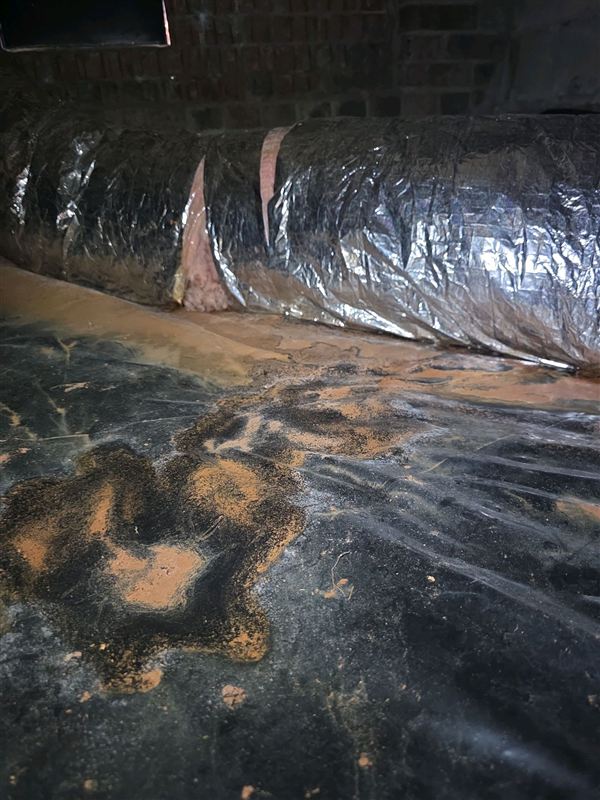
Any paperwork on the repairs, such as what was replaced, who did the work and when, is worth having next to the inspection report. The report describes the condition I can see on inspection day; it doesn't confirm that repairs were permitted or meet code.
Town sewer in Old Fort, septic and wells beyond it
The Town of Old Fort runs its own water and sewer system, and Helene hit both. The town's sewer treatment plant was submerged under 14 feet of water, and local reporting in June 2025 described recurring water line breaks, service interruptions and boil-water notices since the storm. In December 2025, the Governor and NC DEQ awarded Old Fort $10 million for drinking-water resiliency and $5 million for sewer resiliency. For a home on town service, my inspection covers the plumbing in the house, not the town's lines or plant.
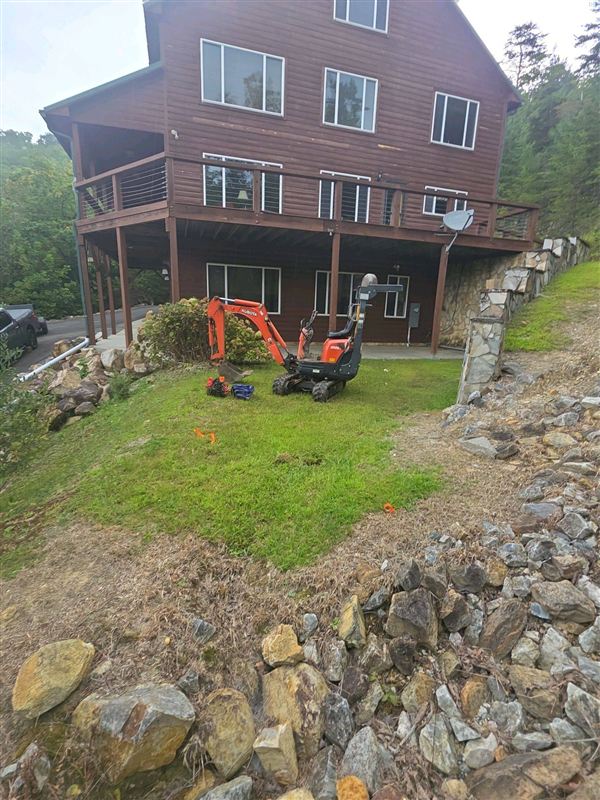
Outside the town's lines, a property may have its own septic system and private well, and a standard home inspection doesn't evaluate either one. For the septic side, that's where my NC On-Site Wastewater Inspector #60071 credential comes in. I track down where the tank is buried, expose it and open it up. From there I examine whatever is visible of the tank and its components, then walk the ground over the drain field looking for warning signs. On a lot that flooded, NCDHHS's post-Helene list of things to watch for included a sunken spot over the tank or drain field, system parts knocked out of place or pushed up to the surface, and sewage backing into the house or wastewater standing on the ground.
If the house draws from a private well, I can sample its water, looking for bacteria and other common contaminants.
Radon on this side of the Swannanoa Gap
Old Fort is in McDowell County, which EPA places in Radon Zone 2, while Buncombe County, just west across the Swannanoa Gap, is Zone 1. Those zones are assigned county by county, but radon varies from one house to the next, so testing the house itself is the only way to learn its level. My radon tests run on a continuous monitor for no less than 48 hours, and EPA's action level, where it recommends fixing a home, is 4 pCi/L.
Choosing services for an Old Fort property
- Connected to town water and sewer: start with a home inspection, and consider radon testing if you'd like to know the home's level.
- On its own well and septic tank: pair the home inspection with a septic inspection, then add well water testing.
- Flooded, repaired or rebuilt after Helene: the same options apply. Share what you know about the flood and the repairs when you reach out, so I know where to focus.
Other towns I serve nearby
I also inspect homes in Marion, the county seat, in Black Mountain, west across the Swannanoa Gap, and in Morganton, about 33 miles east. See all service areas.
Old Fort home inspection FAQ
Is an Old Fort home on town sewer or a septic system?
It depends on where the home sits. The Town of Old Fort runs its own water and sewer system, while a property outside the town's lines may have its own septic system and private well. Let me know what you've been told about the water and sewer when you get in touch. Where a property has its own septic tank or well, those are checked separately from the home inspection, through a septic inspection or well water testing.
What should I know about a house that was repaired or rebuilt after Helene?
New finishes can cover old damage, so I spend extra time in the crawlspace and on the framing, insulation, ductwork and equipment such as the water heater and furnace. The report describes what I was able to see and reach that day. I can't see inside finished walls, and the report doesn't confirm that repairs were permitted or meet code, so any paperwork on the repairs is worth gathering too.
Should a septic system that sat under floodwater be inspected?
NCDHHS's guidance after Helene was to have a flooded septic system inspected by a certified wastewater system inspector, and not to use the home's plumbing while the tank is still under water. My credential is NC On-Site Wastewater Inspector #60071. I expose and open the tank, using a mini excavator when hand digging isn't practical, and report what I can see of the tank and the drain field area.
What should a private well outside Old Fort be tested for?
For private wells in McDowell County, the NCDHHS county fact sheet recommends testing for radon, gross alpha, gross beta and uranium. My well water sampling is for bacteria and other common contaminants.