Inspecting homes around Lenoir
Lenoir is the county seat, a foothills city with Hibriten Mountain rising just past its eastern edge. Furniture manufacturing shaped the town, and NCpedia describes the county as "one of the leading producers of furniture in the world." Two of Lenoir's old industrial buildings joined the National Register in 2017: the Lenoir Cotton Mill-Blue Bell Inc. Plant on College Avenue and the J.M. Bernhardt Planing Mill and Box Factory-Steele Cotton Mill on Steele Street. The Lenoir Downtown Historic District has been listed since 2007.
For the house, I work as NC Home Inspector #4327. Septic systems are covered by a separate state credential, NC On-Site Wastewater Inspector #60071. When a lender, agent, buyer or seller asks for a septic inspection as part of a sale or refinance, state law says it has to be done by someone holding that credential. On the real estate side, I hold NC Real Estate Broker #213426, so I'm extremely knowledgeable about the real estate process and its timelines.
What Lenoir's older housing means for an inspection
Lenoir's houses tend to be older. Census estimates give the city a median year built of 1972, with about 36% of homes dating from before 1960, more than one in ten from before 1940, and only about one in ten from 2000 or later. Countywide, about 15% of the housing is manufactured homes.
Decades of ownership can mean rerouted plumbing, added wiring, a closed-in porch or a finished room, so I watch where later changes meet the original framing and systems. It's a visual, non-invasive inspection carried out under North Carolina's Standards of Practice. In a Lenoir-area home inspection, I go through:
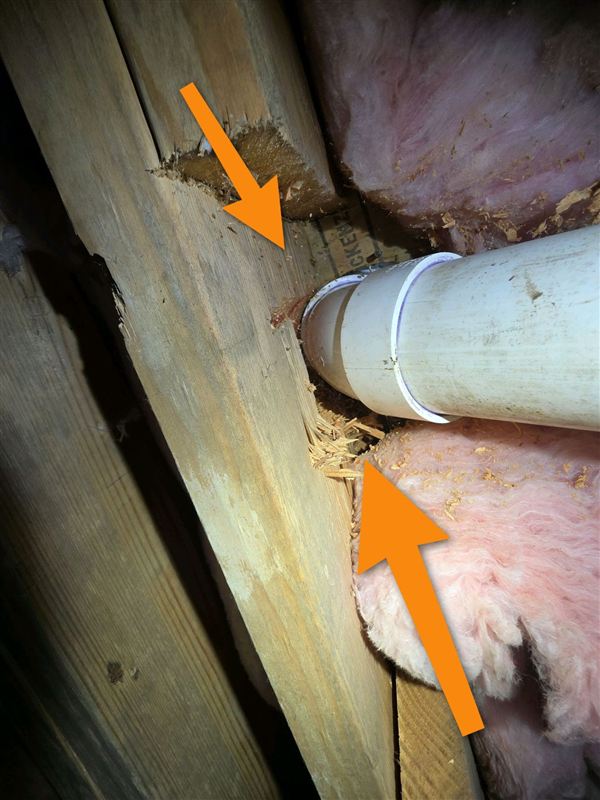
- Underneath: foundation walls, piers, floor framing and the crawl space, watching for moisture and joists cut for later plumbing
- Overhead: roof covering, attic framing, insulation and ventilation
- Outside: siding, trim, windows and doors
- Water: the water heater, fixtures, and the supply and drain lines I can see
- Power: the electrical service and panels, plus whether the house has GFCI protection, smoke alarms and carbon monoxide alarms
- Comfort and kitchen: heating and cooling equipment, visible ductwork, interior rooms and built-in appliances
Septic tanks and wells around Lenoir
Outside town limits, a large share of Caldwell County homes rely on septic. The latest county-level figures are decades old and come from the 1990 Census, which was the final count to ask how homes handled wastewater. On the Catawba basin side of the county, the larger and more populated part, 18,355 homes were on septic, close to two-thirds of the total there. In the smaller Yadkin basin area to the north, it was nearly nine in ten.
Wells are less widespread, but far from rare. For 2015, USGS put about 16,000 of Caldwell's roughly 81,000 residents in its "self-supplied" category, which mostly means private wells, with everyone else on public water. For any property out in the county, it pays to confirm the water source as well as whether the house is on septic.
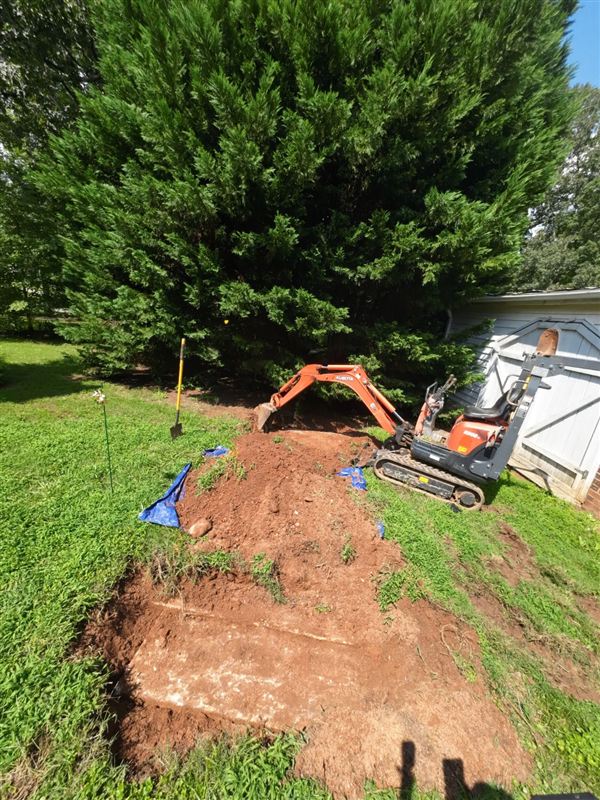
Every septic inspection I do begins by locating the tank, and when it's buried, I uncover it, with a mini excavator when hand digging isn't practical. After the lid comes off, I evaluate the tank and its components as far as they're visible, then cover the drain field area on foot, watching for signs of trouble.
Where the water comes from a well, I draw samples for well water testing, looking for bacteria along with other common contaminants. Caldwell County Environmental Health issues well permits and does bacterial and chemical sampling on new wells, so ask the county what's on file for the property's well.
Septic records come from that same office. Request them from Caldwell County Environmental Health using its Septic System Record Request form.
Radon in Lenoir
EPA's radon map places Caldwell in Zone 2, its moderate-potential tier, and the NC Radon Program advises Caldwell residents to test the air inside their homes and their private well water too. With so many county households drawing water from their own wells, that second half of the advice applies to a good number of properties here.
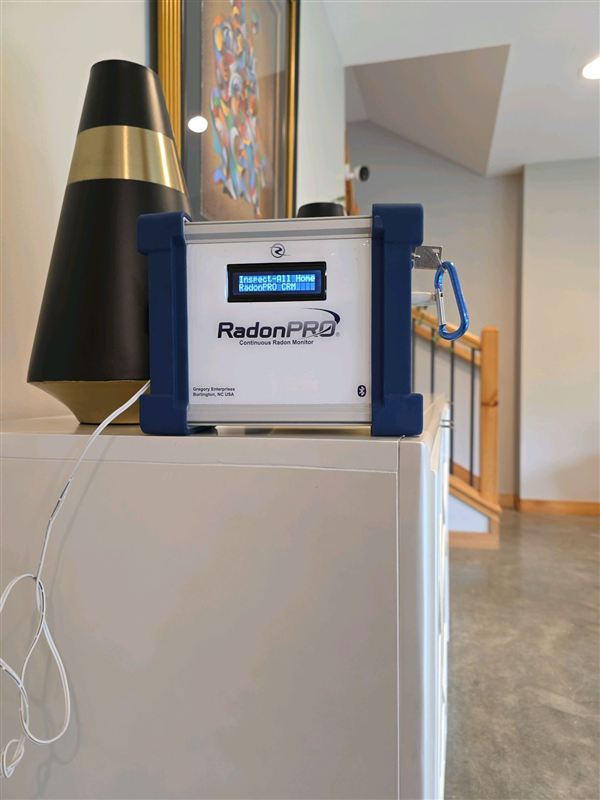
My radon testing runs on a continuous radon monitor, which stays in place a minimum of 48 hours. EPA sets 4 pCi/L as the point where it recommends fixing a home, and for a house served by a well, it also suggests testing the water when the air result is elevated.
Communities near Lenoir
Along with Lenoir itself, I inspect homes in Gamewell, Hudson, Granite Falls, Sawmills, Cajah's Mountain, Cedar Rock, Collettsville, Kings Creek and Blowing Rock, as well as lake homes near Rhodhiss Lake and Lake Hickory. I also work in nearby Hickory, Morganton and Boone.
Lenoir inspection questions
Where can I get septic records for a Caldwell County property?
The Caldwell County Environmental Health office is at 2345 Morganton Blvd., Lenoir, open weekdays from 8 to 5. You can reach it at 828-426-8579 or envhealth@caldwellcountync.org and ask for the Septic System Record Request form.
Have high radon levels been found in Caldwell County?
Yes. Caldwell's highest result in NC Radon Program data (the map was refreshed in August 2025) is 160 pCi/L, forty times the 4 pCi/L action level EPA uses. Those figures are reported by test-kit companies and a company that leases continuous monitors, so 160 marks how high a Caldwell test has gone, not what a typical home here measures. If you'd like a radon test, add it to your inspection request.
What if the home is near Wilson Creek or another area that flooded during Helene?
Mention it when you schedule. The News-Topic reported that the flooding permanently changed the flow of Wilson Creek and left Collettsville cut off like an island. NCDHHS's post-flood warning signs for septic systems include soil sinking near the tank or drain field, parts of the system that shifted or surfaced, and sewage coming back into the house or wastewater pooling in the yard; those are the kinds of things I look for in a septic inspection. In the house, I evaluate the crawl space, foundation and framing that are visible, but damage hidden behind finished walls is outside what a visual inspection can see.
Will an older Lenoir house be held to today's building code?
No. Under the Standards of Practice, a North Carolina home inspection doesn't have to address code compliance, and I don't give code opinions. For a house built decades ago, my report covers the systems and components that aren't functioning as intended, what that could mean, and when a specialist, such as an electrician or a structural engineer, should take a closer look.