Why a septic inspection matters here
Outside town sewer lines, many homes in this part of North Carolina handle their own wastewater. NCDHHS estimates that about half of all occupied homes in the state use a septic system. The last Census count of how homes handle sewage was in 1990. At that time, more than half of the homes in the Catawba River basin parts of Burke, Caldwell and Catawba counties were on septic, and in Alexander County's part of the basin it was about 88 percent. Those numbers are old, but a large share of homes outside town limits still rely on septic.
A standard home inspection doesn't answer the septic question. Under the NC Home Inspector Licensure Board's Standards of Practice, a home inspector isn't required to inspect on-site waste disposal systems, so the tank and drain field fall outside a regular home inspection. North Carolina law also requires anyone who conducts or offers a septic inspection connected to a sale, refinance or title transfer to be certified by the NC On-Site Wastewater Contractors and Inspectors Certification Board (N.C.G.S. 90A-72). I'm an NC On-Site Wastewater Inspector #60071, and septic inspections are a core part of what I do.
Age matters, too. Census estimates put the median year built at 1980 for homes in the Morganton and Lenoir areas, and EPA's homebuyer guide gives 15 to 40 years as the average lifespan of a septic system. Older systems aren't always well documented, either. Buncombe County didn't issue septic permits before 1977, so it generally has no records for systems older than that.
Whether you're buying, selling or already own the home, the inspection is the same.
How my septic inspection works
Every property is different, but the job follows the same basic order.
1. Locate the system
First I have to find the tank. If the county has a permit or layout drawing on file, that's a helpful starting point, and anything the owner knows about where the tank and lines are can save time. Then I locate the tank on site and mark where it sits.
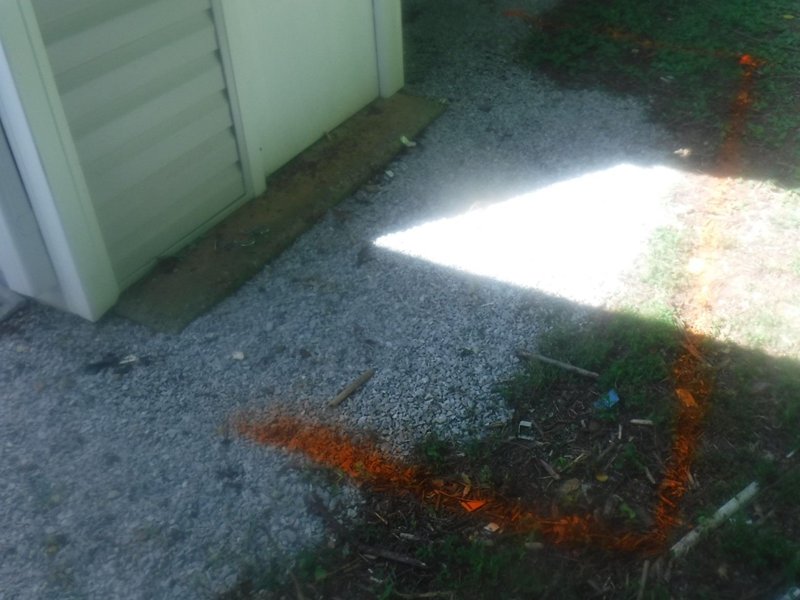
2. Uncover and open the tank
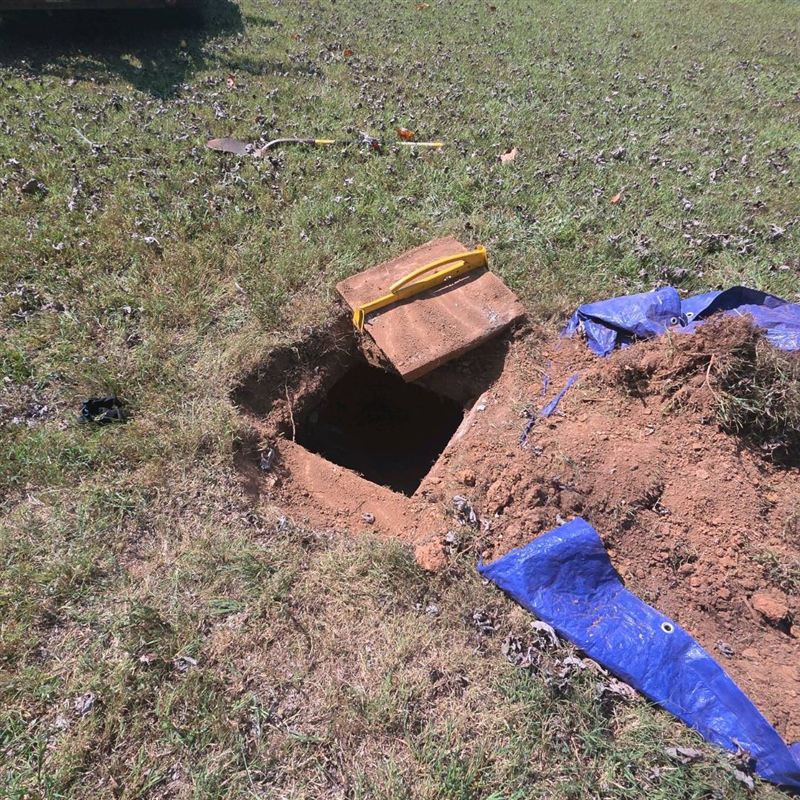
If the lid is buried, I uncover it, with a mini excavator when hand digging isn't practical. Once the lid is exposed, it comes off and I can see inside.
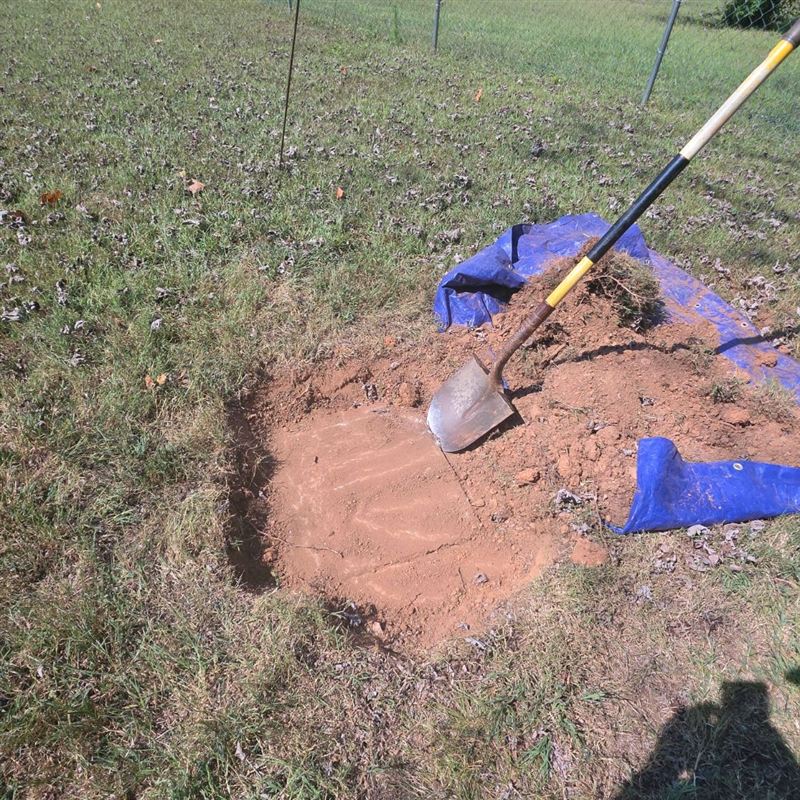
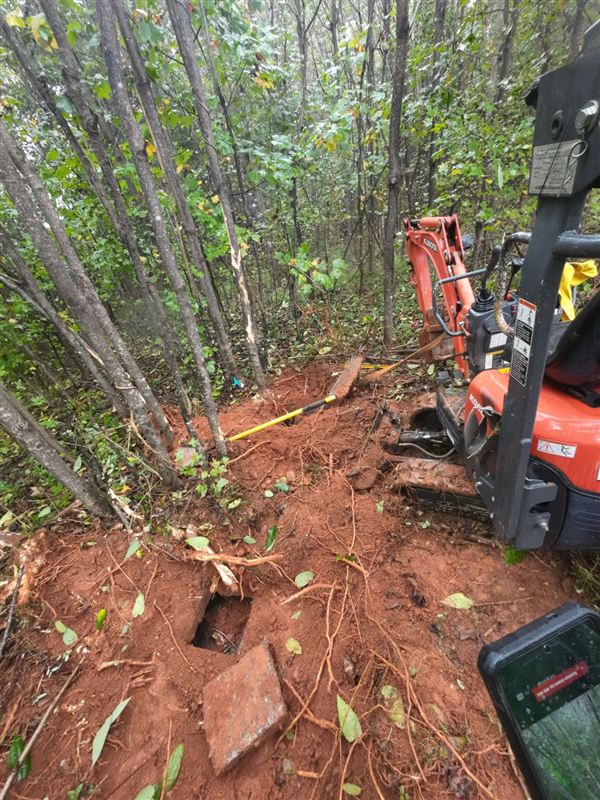
3. Evaluate the tank and its components
With the tank open, I evaluate the visible condition of the tank and its parts, including:
- The lid and access openings
- The tank walls and overall structure
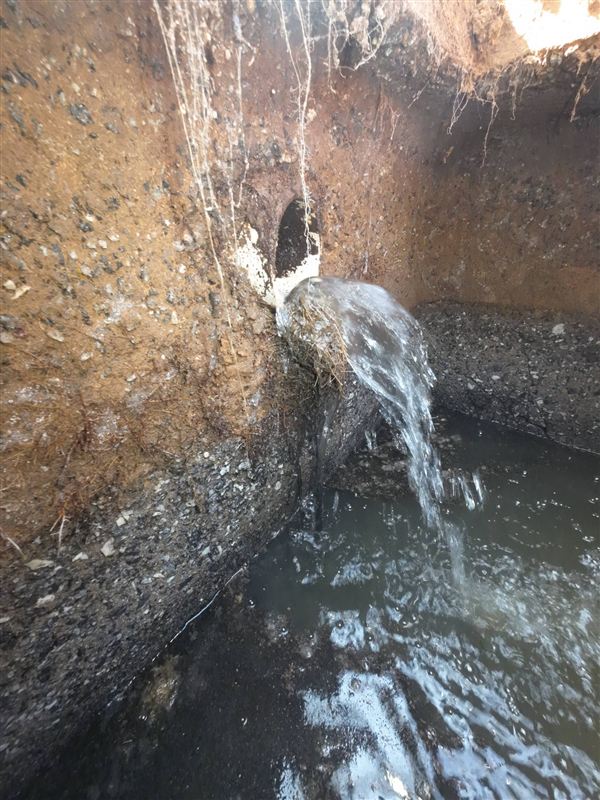
- The inlet and outlet pipes, and the pipe tees where they enter and leave the tank
- Roots growing into the tank or its pipe openings
- How water is flowing into the tank, and signs that it isn't moving the way it should
4. Look over the drain field area
The drain field is where liquid leaving the tank soaks into the soil. Most of it is underground, so I look over the area for signs of trouble. EPA's list of warning signs includes standing water or damp spots near the tank or drain field, sewage odors, and bright green, spongy grass over the drain field even in dry weather.
5. Explain what I found
When I'm done, I go over what I found and put it in writing with photos, so you can see the same things I saw.
What turns up underground
These are the kinds of problems you'd never see from the yard. The photos below are from septic inspections I've done.
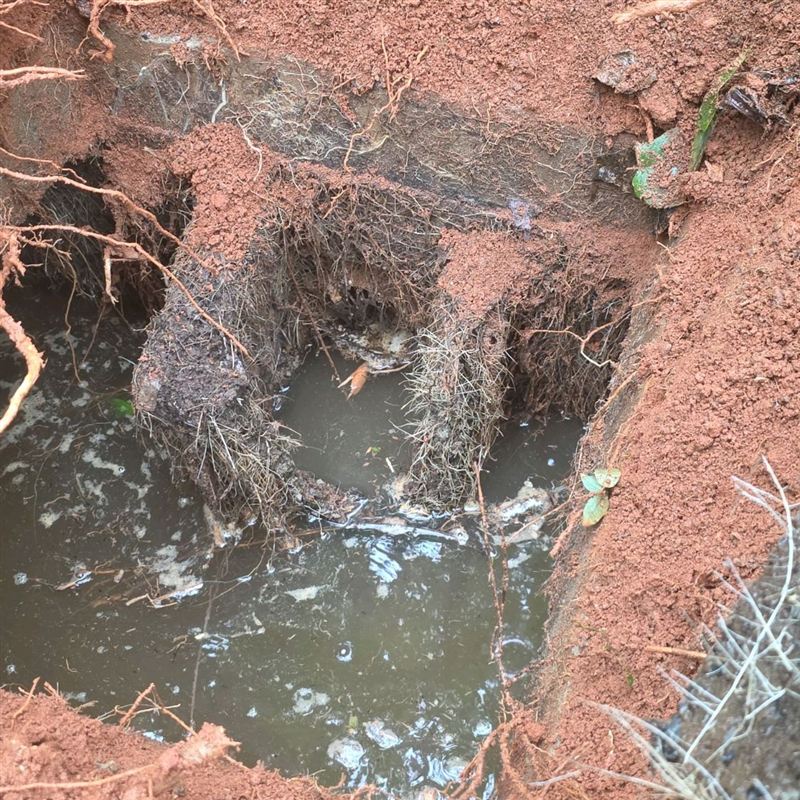
Tree roots in the tank
Roots go looking for water, and a septic tank is full of it. They can work their way in through joints, cracks and pipe openings and keep growing once they're inside. A yard full of mature trees is a beautiful thing, but it's worth knowing what the roots are doing underground.
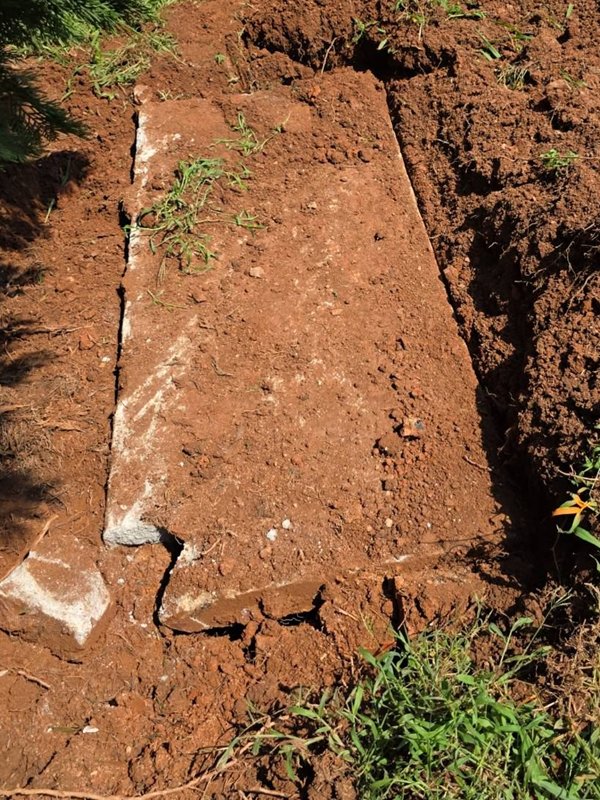
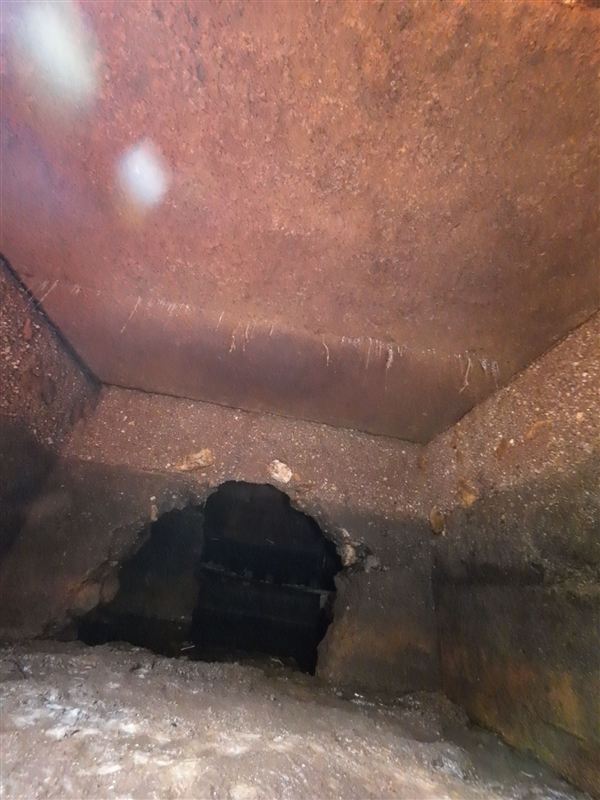
Old homemade tanks
Some older properties have a tank that was built by hand on site instead of a manufactured tank. After decades in the ground, these tanks can have cracked lids, holes in the walls and corroded pipes. A cracked lid is a safety concern as well as a septic one, since it's the only thing covering an open tank.
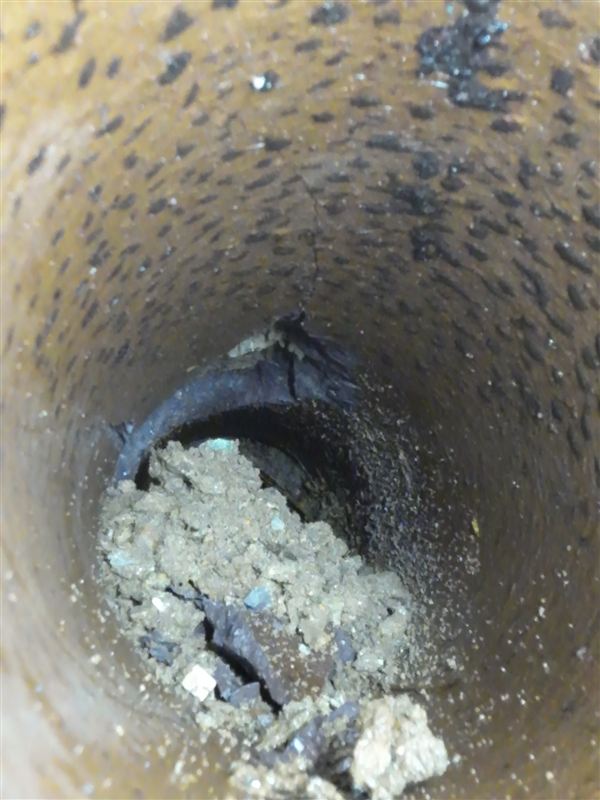
Cracked and damaged pipes
The pipes running into and out of the tank deal with shifting soil, roots and age. A cracked pipe can let soil in and wastewater out.
After Hurricane Helene
The National Weather Service described Helene's flooding as historic in Burke, McDowell, Caldwell and Buncombe counties. In McDowell County, the county reported that calls to its disaster hotline were "mostly water, well and septic issues." After the storm, NCDHHS advised having flooded septic systems inspected and listed warning signs to watch for:
- Soil settling around the tank or drain field
- System parts that moved or came to the surface
- Sewage backing up or wastewater on the ground
If a property sat in floodwater or was repaired after the storm, it makes sense to look at the septic system too.
County septic records
Each county keeps its own septic permits, and how far back they go varies. A permit or layout drawing can show where the system was supposed to go and what it was designed for. North Carolina septic permits are based on the number of bedrooms, so it can be useful to compare the permit with the house as it stands today. Here's where to look:
- Burke County (Morganton): Burke County Environmental Health generally has older septic permit and layout records on file, and it handles existing-system verification permits.
- McDowell County (Marion, Old Fort): the Foothills Health District runs a septic records portal with permit information and system layouts when available.
- Buncombe County (Black Mountain): septic and well records can be searched online without registering. Septic permits weren't issued before 1977, and well permits began in 2005.
- Catawba County (Hickory, Newton, Conover, Maiden): Catawba County Environmental Health takes online requests for a copy of an existing septic permit. The county notes its ePermits portal may wrongly show some permits as expired.
- Caldwell County (Lenoir): Caldwell County Environmental Health has a Septic System Record Request form.
- Watauga County (Boone): AppHealthCare, the district health department, offers an online septic permit search.
- Alexander County (Taylorsville): contact the Alexander County Health Department's Environmental Health Division.
- Lincoln County (the Lincoln County side of Maiden): Lincoln County Environmental Health handles septic and well records requests through the county's public records portal.
Records are a starting point, not the whole story. A permit shows what was approved, sometimes decades ago. It doesn't show what condition the tank is in today. That's what the inspection is for.
Schedule it with your home inspection
If the home has a septic system, you can schedule the septic inspection together with your home inspection, so one call covers both. If the property also has a private well, consider adding well water testing. EPA lists high nitrate or coliform levels in nearby wells among the signs of a septic problem. Radon testing with a continuous radon monitor can be added as well.
I'm also an NC Real Estate Broker #213426, so I'm extremely knowledgeable about the real estate process and its timelines. Septic work can involve digging, county records and sometimes a follow-up from a contractor, and I keep that in mind when we set the schedule.
Septic inspection FAQ
Does a home inspection include the septic system?
No. Under the NC Home Inspector Licensure Board's Standards of Practice, a home inspector isn't required to inspect on-site waste disposal systems, so the tank and drain field fall outside a standard home inspection. I offer the septic inspection as a separate service, and you can schedule it together with your home inspection.
Do you have to dig to inspect the tank?
Often, yes. If the tank lid is buried, it has to be uncovered before the tank can be opened and evaluated. If you don't own the property, make sure the owner knows digging is part of the inspection.
What if nobody knows where the septic tank is?
Then the first job is finding it. A county permit or layout drawing, when one exists, is a good starting point, and so is anything the owner remembers. From there I locate the tank on site. Some older systems have no permit on file at all. Buncombe County, for example, didn't issue septic permits before 1977.
Is a septic inspection required when buying a home in North Carolina?
It depends on the transaction. EPA notes that a septic inspection may be required by local or state government or by your lender, so check with your lender and your attorney. Even when no one requires it, a standard home inspection doesn't cover the septic system, so a separate septic inspection is the way to learn its condition.
Will the inspection tell me if the system passes or fails?
No. A septic inspection is an evaluation of the visible condition of the tank, its components and the drain field area on the day of the inspection. It isn't a pass/fail certification or a guarantee of future performance. I explain what I found and point out anything that should be looked at by a septic contractor or the county health department.
Do you pump or repair septic systems?
No. I inspect septic systems; I don't pump tanks or make repairs. Pumping is done by a pumping company, and repairs are generally made by a septic contractor under a permit from the county health department. Because I don't do the work, my only job is to tell you what I see.
The property flooded during Hurricane Helene. What should I watch for?
After Helene, NCDHHS advised having flooded septic systems inspected. Warning signs it listed include soil settling around the tank or drain field, system parts that moved or came to the surface, and sewage backing up or wastewater on the ground. NCDHHS also advised not using the plumbing while a septic tank is submerged.
How often should a septic system be inspected?
NCDHHS recommends having a septic system inspected every three years by a qualified professional, or as your health department recommends, and pumping the tank as needed, typically every three to five years. EPA's guidance is similar: inspect every one to three years and pump every three to five years.