Home inspections in the county seat
Newton sits near the center of the county, in the Catawba Valley of the western Piedmont. It borders Conover to the north, Hickory to the northwest, Claremont to the northeast and Maiden to the south. Settlers gathered around the courthouse in the 1840s, the town was incorporated in 1855, and the railroad later brought textile and furniture manufacturing. The 1924 courthouse now houses the county history museum.
I'm Shannan Hurt, NC Home Inspector #4327 and NC On-Site Wastewater Inspector #60071, and a native of the area. Because Catawba County's Environmental Health office is here in Newton, I've put my notes on getting county septic and well records on this page. They apply just as well to properties in Conover and most of Hickory and Maiden.
Newton's houses, era by era
Recent Census estimates put the median year built for Newton homes at 1977, older than the medians for Hickory (1982), Maiden (1984) or Conover (1991). About three out of four Newton homes are single-family detached houses, and mobile homes are rare inside the city. Roughly 9% were built in 1939 or earlier, about 28% before 1960, nearly one in five in the 1970s alone, and about 23% in 2000 or later.
The North Main Avenue Historic District, listed on the National Register in 1986, is mostly residential: 86 contributing buildings on 65 acres, in Colonial Revival and Craftsman styles. They range from the Andrew J. Seagle House, built around 1861, to houses from about 1936. Homes that age have often been updated more than once, so much of my time in them goes to the places where newer work meets the original.
Following the NC Standards of Practice, I inspect the readily visible and readily accessible parts of the home. Here's where my attention tends to go, depending on when the house was built:
- Before 1940: original foundations, piers and framing, porches and wood trim, and how later wiring, plumbing and heating were worked into the old structure
- 1940s and 1950s: crawl spaces, and joists or beams that may have been cut or notched as plumbing and ductwork were added over the years
- 1970s: the condition of major equipment that may be original or may have been replaced, and how later additions were tied into the house
- 2000 and newer: how the lot sheds water around the foundation, whether the attic is ventilated and insulated as intended, crawl space vapor barriers, and the built-in kitchen appliances
On every house, the Standards also have me report whether smoke alarms are present, whether carbon monoxide alarms are present where there are fuel-fired appliances, a fireplace or an attached garage, and whether GFCI protection is present near plumbing fixtures.
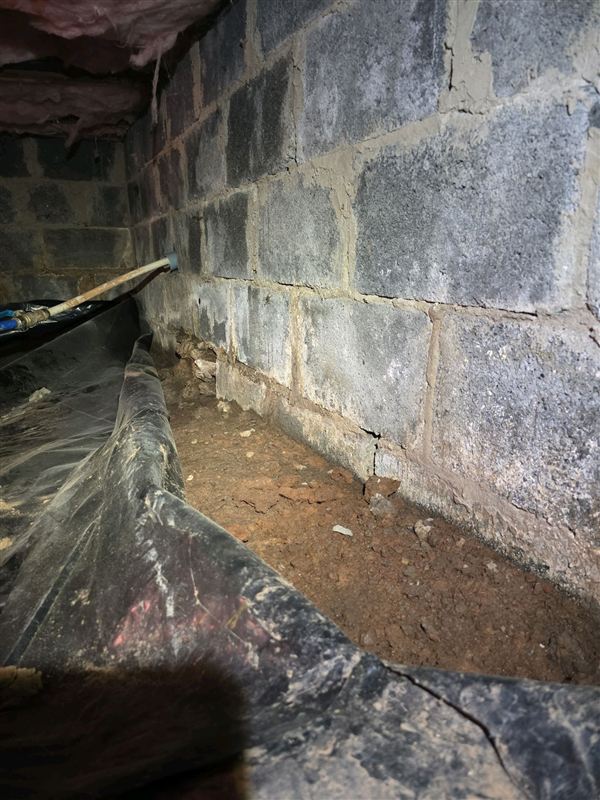
Everything above is visual and non-invasive. I don't cut into walls or make repairs, and the report isn't a ruling on building-code compliance or a structural engineer's analysis. When a finding calls for that kind of expertise, the report says which specialist to bring in. For a termite or other wood-destroying insect report, you'll want a licensed pest control company.
City sewer, septic or a well?
The City of Newton runs its own electric, water and wastewater utilities. Even so, confirm how a particular house is connected before you book, because the answer decides which services make sense:
- On city water and sewer: a home inspection, with radon testing added if you'd like it. Radon enters from the soil under a house, so city water doesn't rule it out.
- On a septic system: add a septic inspection. A standard NC home inspection doesn't cover on-site waste disposal systems.
- On a private well: add well water testing. The quality of an on-site water supply is also outside a standard home inspection.
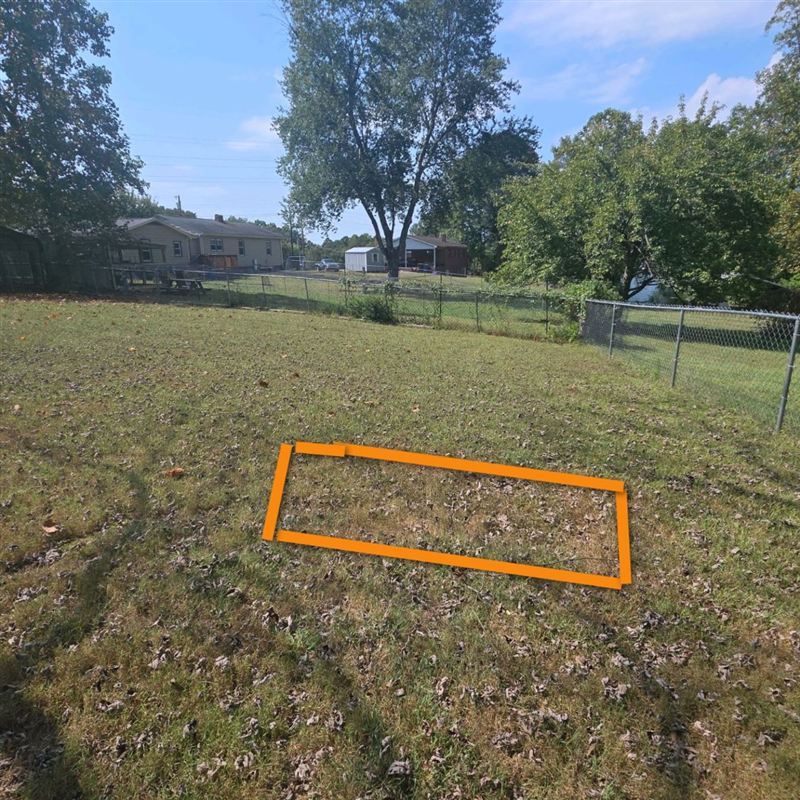
A septic inspection starts with finding the system. From there I uncover the tank and open it, with a mini excavator when hand digging isn't practical, check the visible condition of the tank and its parts, and go over the drain field area for signs of trouble. Well water testing means taking samples of the well water, which are then tested for bacteria and other common contaminants.
Getting Catawba County septic and well records
Catawba County Environmental Health, a division of Catawba County Public Health, permits septic systems and private wells through its On-Site Water Protection program. If a property anywhere in the county is on septic or a well, its permit file is worth pulling early.
When the records come back, here's what to look at:
- Bedrooms on the permit. NC septic permits are based on two people per bedroom. If the house has gained bedrooms since the system was permitted, compare the permit to the house as it stands now.
- The soil evaluation. NC State Extension notes that the local health department is where owners get copies of both the septic permit and the soil evaluation sheet, so ask for both.
- Well permits from mid-2008 on. State law requires a county permit for private wells built, repaired or abandoned on or after July 1, 2008, and the health department tests a new well's water within 30 days after the well's certificate of completion. For an older well, ask what the office has on file.
- Which county the property is in. Parts of Hickory reach into Burke and Caldwell counties, and part of Maiden is in Lincoln County. Records for those properties come from that county's health department instead.
Radon, well water quality and Helene
I keep Catawba County's radon zone, the NCDHHS testing advice, county well-water test results and Hurricane Helene's effects on the county together on my Hickory page, so they aren't repeated here. For a Newton house, radon testing uses a continuous radon monitor that runs at least 48 hours, and the result is compared against EPA's action level of 4 pCi/L.
Nearby communities I serve
Conover and most of Hickory and Maiden share Newton's county, so the records notes above apply there too. See my pages for Conover, Maiden and Hickory, or browse all service areas.
Newton home inspection FAQ
What's different about inspecting a house in the North Main Avenue Historic District?
The inspection follows the same NC Standards of Practice as any other house. What's different is the age: the district's houses date from about 1861 to about 1936, and houses that old have usually been updated over the decades. I pay close attention to where those updates connect to the original structure, and the report lists anything I couldn't see or reach and why.
Does a Newton home on city water and sewer still need radon testing?
City utilities don't rule radon out. Radon is a gas that enters from the soil under a house, so the water source doesn't change whether the indoor air is worth testing. EPA and the Surgeon General recommend testing all homes below the third floor. Well water testing is different: it only applies if the house has a private well.
The county portal shows the septic permit as expired. Is that a problem?
Not necessarily. Catawba County's ePermits portal itself warns that some permits may wrongly show as expired. Check with Catawba County Environmental Health at 25 Government Drive in Newton to confirm the permit's actual status. Either way, a permit is a record on paper; a septic inspection looks at the system's visible condition today.
Nearly one in five Newton homes was built in the 1970s. What do you watch for in a house that age?
A 1970s house may still have some original equipment, or it may have been replaced once or more. I look at the condition of the water heater, heating and cooling equipment, electrical panel and roof covering, check how any additions or finished spaces connect to the original house, and report anything that isn't functioning as intended.
Does your real estate broker license affect the inspection?
No. My reports describe the visible condition of the home, following the NC Standards of Practice. The broker license simply means I'm extremely knowledgeable about the real estate process and its timelines.