What radon is
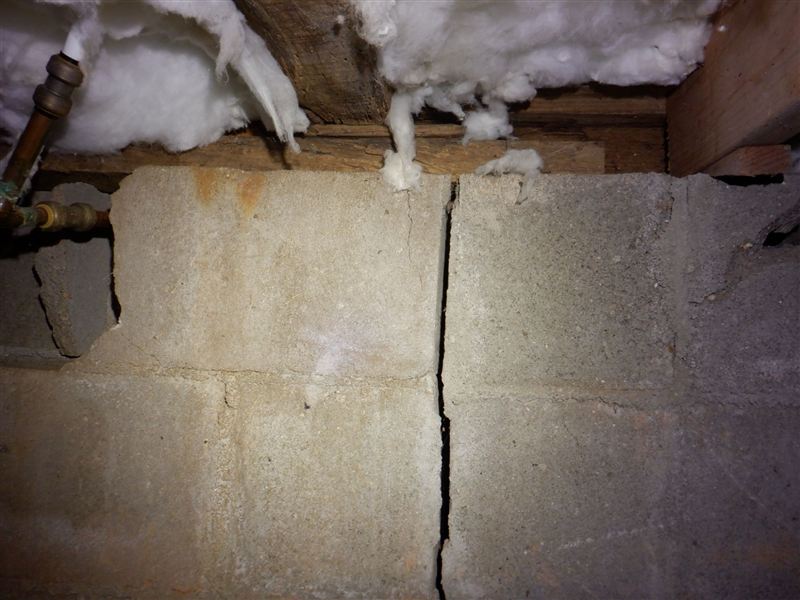
Radon is a naturally occurring radioactive gas that forms as uranium breaks down in soil and rock. It has no color, odor or taste. It moves up through the ground and can get into a house through cracks and openings in the foundation, slab or crawlspace, then build up indoors.
It matters because long-term exposure is linked to lung cancer. NCDHHS estimates that about 480 North Carolinians die each year from radon-induced lung cancer, and it reports elevated radon levels in 90 of the state's 100 counties. EPA and the U.S. Surgeon General recommend testing all homes below the third floor.
Radon levels are highly site-specific. A neighbor's result or a county map can't tell you what's in the house you live in or are thinking about buying. A test can.
The EPA action level: 4 pCi/L
Radon is measured in picocuries per liter of air (pCi/L). EPA recommends fixing a home when the radon level is 4 pCi/L or higher, and says homeowners should consider fixing levels between 2 and 4 pCi/L. For comparison, EPA puts the average indoor level in U.S. homes at about 1.3 pCi/L and outdoor air at about 0.4 pCi/L. EPA also estimates that nearly 1 in 15 U.S. homes has a radon level of 4 pCi/L or more.
Radon from the foothills to the mountains
EPA's Map of Radon Zones groups counties by their potential for elevated indoor radon. I'm a native of this area, and here is where the counties I serve fall:
- Zone 1, the highest potential: Watauga County (Boone) and Buncombe County (Black Mountain). EPA describes Zone 1 as areas where average indoor radon levels may be greater than 4 pCi/L.
- Zone 2, moderate potential: Burke County (Morganton), Caldwell County (Lenoir), McDowell County (Marion and Old Fort), Catawba County (Hickory, Newton, Conover and Maiden) and Alexander County (Taylorsville). Zone 2 areas are predicted to average between 2 and 4 pCi/L.
A zone is a starting point, not a verdict. EPA says homes with elevated radon have been found in all three zones, and its North Carolina map says all homes should be tested regardless of zone.
The NC Radon Program's county data points the same way. In its map data (updated August 2025), each of these seven counties has at least one building test reported at or above 4 pCi/L, and the highest single readings run from 46 pCi/L in McDowell County to 388 pCi/L in Watauga County. Those are the single highest results reported, not typical levels, but they show that elevated radon turns up across this region.
How I test: a continuous radon monitor
I test with a continuous radon monitor (RadonPRO). A passive test kit gives you one result at the end of the test. A continuous monitor records radon levels throughout the test, so you get the average for the test period plus a record of how the level rose and fell along the way.
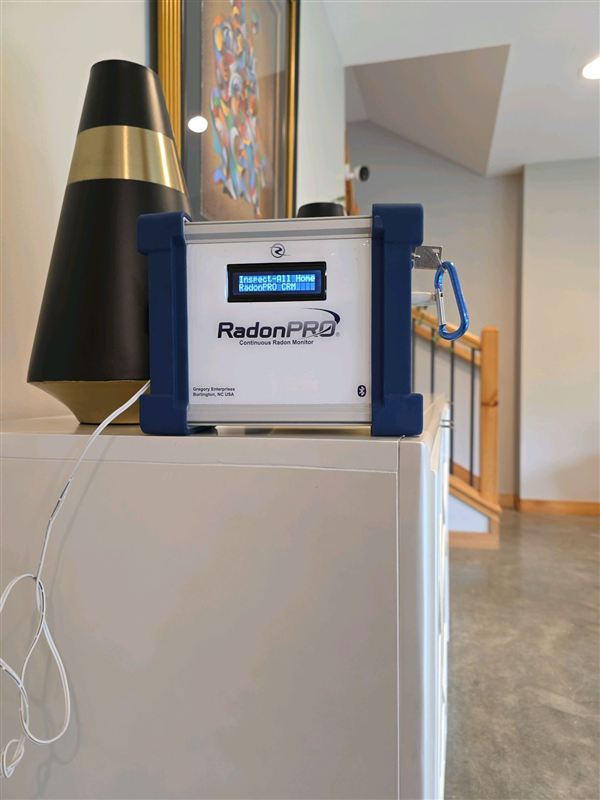
That detail is useful in a real estate transaction. EPA's Home Buyer's and Seller's Guide to Radon lists a continuous monitor running at least 48 hours as one of its real estate test options. For real estate, the NC Radon Program recommends an hour-by-hour measurement with analysis from a professional, which it notes can help both parties. EPA also says every real estate radon test should include steps to prevent or detect interference, and notes that continuous monitors can reveal unusual swings in radon levels.
Test conditions and how long it takes
Every test runs for at least 48 hours. To get a result that reflects the house, EPA calls for closed-house conditions and careful placement:
- Windows and outside doors stay closed for at least 12 hours before the test starts and for the whole test, apart from normal coming and going.
- The monitor goes in the lowest level of the home that could be used regularly, finished or unfinished.
- It is not placed in a closet, stairway, hallway, crawlspace, kitchen, bathroom, laundry room or furnace room.
- It sits at least 20 inches above the floor.
- It stays in place, undisturbed, until the test is finished.
If the home is occupied, the people living there need to know about closed-house conditions ahead of time, so setup and pickup are planned around that. I'm also NC Real Estate Broker #213426, so I'm extremely knowledgeable about the real estate process and its timelines. That helps when a radon test has to fit within a contract's deadlines.
One test or a follow-up test?
For real estate, EPA's guide treats a continuous monitor test of at least 48 hours as one complete short-term option: if the average is 4 pCi/L or more, EPA recommends fixing the home. The NC Radon Program's general testing guidance is to start with a short-term test and, if the result is 4 pCi/L or higher, follow up with a long-term test or a second short-term test. It recommends fixing the home if the long-term result, or the average of the two short-term tests, is 4.0 pCi/L or more.
If the radon level comes back high
Radon levels in a home can be reduced with a radon reduction (mitigation) system. I don't design or install mitigation systems. My job is to measure the radon level and report the results clearly. If the level is elevated, the next step is talking with a certified radon mitigation professional.
NCDHHS's radon fact sheet for Burke County, for example, advises considering a certified radon professional to install a reduction system at 2 to 3.9 pCi/L, and strongly recommends one at 4.0 pCi/L or higher. If the home is part of a sale, EPA suggests the buyer and seller discuss the timing and cost of mitigation. After a system is installed, a follow-up radon test shows whether the level has come down.
Radon and private wells
Radon can also be present in well water. NCDHHS places Alexander, Buncombe, Burke, Caldwell, Catawba, McDowell and Watauga counties in its "Test Indoor Air and Private Well Water" group, and its county fact sheets suggest testing private wells for radon, gross alpha, gross beta and uranium. EPA adds that if a home's air radon is elevated and it has a private well, the water should be tested too.
With well water testing, I collect well water samples for bacteria and other common contaminants. For radon and other radionuclides in well water, ask your county health department or a certified lab about testing options.
Radon testing FAQ
How long does a radon test take?
The monitor runs for at least 48 hours. The house needs to stay closed up, with windows and outside doors shut apart from normal coming and going, for at least 12 hours before the test starts and for the whole test.
What radon level is considered high?
EPA recommends fixing a home at 4 pCi/L or higher and says to consider fixing levels between 2 and 4 pCi/L. For comparison, the average indoor level in U.S. homes is about 1.3 pCi/L.
My county is in a moderate radon zone. Do I still need to test?
Yes. Testing is the only way to know a home's radon level. EPA says homes with elevated radon have been found in all three radon zones, and its North Carolina map says all homes should be tested regardless of zone. Radon levels are highly site-specific, so a neighbor's result doesn't tell you about your house.
Do you install radon mitigation systems?
No. I test for radon and report the results. If the level is elevated, a certified radon mitigation professional can design and install a reduction system. A follow-up radon test after the system is installed shows whether the level has come down.
Should I test my well water for radon too?
NCDHHS recommends testing both indoor air and private well water in Alexander, Buncombe, Burke, Caldwell, Catawba, McDowell and Watauga counties, and its county fact sheets suggest testing wells for radon, gross alpha, gross beta and uranium. My well water sampling is for bacteria and other common contaminants, so for radon in water, ask your county health department or a certified lab about testing options.
The house was already tested for radon. Should it be tested again?
EPA's home buyer's and seller's guide says a buyer may ask for a new test if the earlier test isn't recent (for example, more than two years old), if the home has been renovated since, or if the buyer plans to use a lower level of the home.